


This article contains affiliate links. If you purchase through these links, we may earn a small commission at no extra cost to you.
Autumn tope from Greystones to Wicklow
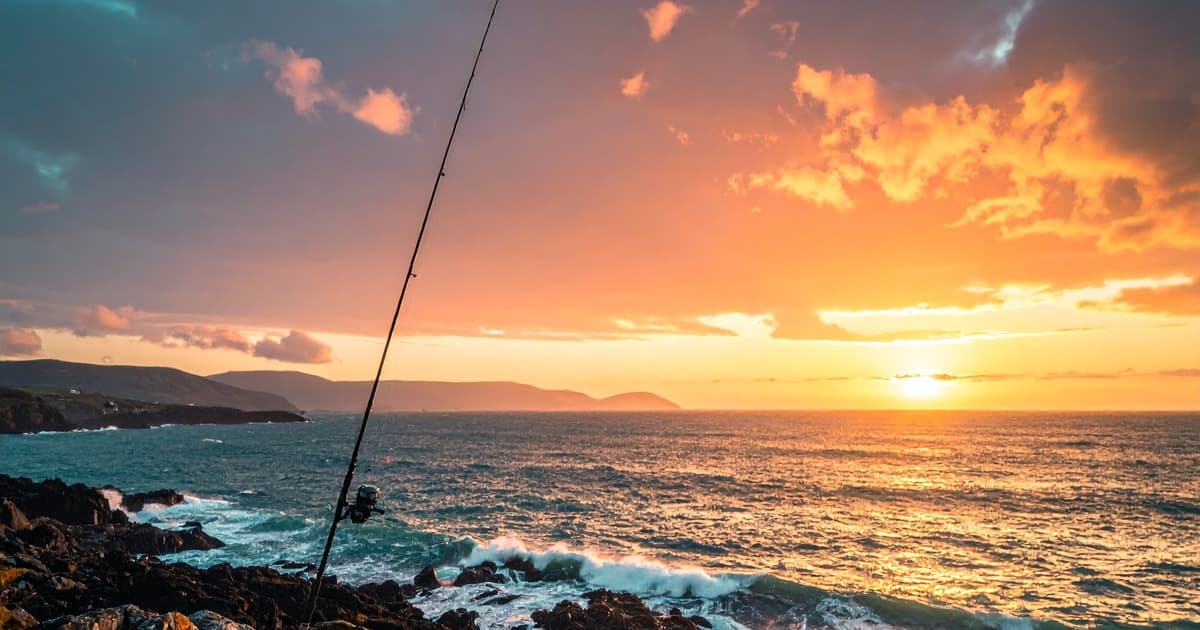
Tope (Galeorhinus galeus) is the largest shark regularly taken from Irish beaches. On the Wicklow coast the honest shore window is late September through November, night spring tides, whole mackerel or herring on Kilcoole north end (Ballygannon), The Murrough, and calm October nights at Greystones South. Use late August to sort heavy beach gear, wire-free traces and whole-bait elastic before the first useful spring. Do not treat the Wicklow Head lighthouse rocks as a casual autumn add-on. That mark has a severe tide rip, deep holes off the steps, rockfall from above, and a swell that cuts exits fast. Fish it only in flat calm, never alone, and only after you have walked your escape route in daylight. Beach marks (Kilcoole north and The Murrough) are the honest starting points for shore tope.
Fish of 20 to 30kg are caught from Irish beaches every season. From the shore, a double-figure tope is a serious achievement and a realistic target on big October tides if you fish dark hours and keep fresh bait. Boat records run higher; this guide is shore-only.
Tope are built for speed, a slender, torpedo-shaped body and powerful tail deliver runs that empty a beachcaster spool if your drag is set wrong. Plan the session around the tide table, not daylight.
What is tope?
Tope (Galeorhinus galeus) is a member of the shark family and the largest species regularly caught from the Irish shore. Fish of 20 to 30kg (44 to 66lbs) are caught from Irish beaches every season, with the boat record standing significantly higher. From the shore, a double-figure tope is a serious achievement and a realistic target for dedicated anglers at the right marks in October and November.
Tope are built for speed, a slender, torpedo-shaped body and powerful tail deliver runs of extraordinary length on first contact. The experience of hooking a tope from the shore at night, watching the rod slam round and line vanish from the spool, is one that anglers remember for years. Tope should always be returned. They are a vulnerable, slow-growing species and release is the strong norm in Ireland, though not a legal requirement here. Handle shore-caught tope with care and return immediately.
When do tope appear on Irish shores?
Shore tope in Ireland are primarily an autumn species. The main window on the east coast runs from late September through to mid-November, with October the peak month. Tope follow the autumn migration of mackerel, herring and other baitfish inshore and are most active at night, particularly on big spring tides when bait fish are driven close to the beach by tidal pressure.
Boat fishing for tope has a longer season, June through October from marks off Wicklow Head, Arklow Bank and similar offshore ground. Shore fishing opportunities are more concentrated, more weather-dependent, and more demanding, which is precisely what makes landing one such a significant event.
Where to target tope from the shore in Ireland
Kilcoole Beach, North End (Ballygannon)
One of the most reliable shore tope marks on the east coast. The northern end of Kilcoole beach near the first river at Ballygannon has produced tope consistently in October and November on big spring tides. Fish after dark with whole mackerel or herring on a running ledger, cast at medium range (60 to 80m). Railway crossing applies, cross with care.
The Murrough, North Section
The northern section of The Murrough near Ballygannon also produces tope alongside Kilcoole. Night sessions on October spring tides with fresh whole mackerel are the formula. This is a serious, exposed mark, bring a quality headtorch and know your exit before the tide rises.
Greystones South Beach
Occasional tope have been caught from Greystones South on autumn night sessions, though it is less consistent than the Kilcoole/Murrough area. Worth targeting if conditions align on a big October tide.
Tackle for shore tope
Shore tope demands the heaviest gear in your armoury. A strong beachcaster of 13 to 14ft rated 6 to 10oz matched to a multiplier or powerful fixed-spool reel loaded with 30lb monofilament is the baseline. Tope make powerful initial runs and will test every component, reel drag, knots and line. There are no second chances with weak tackle on a big fish.
Mainline
30lb monofilament, enough strength for a big fish, enough stretch to absorb runs without shock-loading your knots
Trace
50lb mono hooklink of 3 to 4 feet, tope have no cutting teeth so no wire required, but the heavy mono resists abrasion from the body
Hook
Size 6/0 to 8/0 strong forged pattern, must be strong enough not to open under sustained pressure from a large fish
Lead
5 to 6oz breakaway grip lead, the tidal run at shore tope marks demands a lead that holds firmly in sand
Best baits for tope
Whole fresh mackerel is the outstanding tope bait from Irish shores. A whole medium mackerel (18 to 22cm) flappered, scored along each side, on a 6/0 hook with the point exiting through the tail root is the classic presentation. Bind the bait firmly to the hook shank with elastic thread so it survives the cast intact. Fresh is significantly better than frozen, if you can catch mackerel on the day, do so.
Whole herring is an excellent alternative when mackerel is unavailable. A large fresh sandeel flappered on a smaller hook will also take tope. Larger baits consistently outperform small ones for tope, the fish are hunting sizeable prey and a 200g whole fish is not too big.
Playing and returning tope
Tope require careful handling for successful release. When a tope takes the bait it will typically run hard immediately, let it run freely against the drag for 10 to 15 metres before engaging and striking firmly. Once hooked, tope make powerful sustained runs that may strip 50 to 100 metres of line. Keep steady pressure and avoid pumping too aggressively, the hook needs to hold throughout.
Tope should always be returned. They are a vulnerable, slow-growing species and release is the strong norm in Ireland, though not a legal requirement here. A 20kg fish may be 25 years old. Handle in the water where possible, support the fish horizontally, unhook quickly with long-nosed pliers and lower it back gently. A well-handled tope recovers and swims away strongly. Never remove a tope from the water for a photograph.
The tide and timing formula
Shore tope fishing is almost entirely a night activity. Fish move closer inshore after dark, following baitfish that are easier to hunt in low light. The most productive tidal window is the flooding big spring tide in October, high tidal energy, maximum baitfish movement, and low light coinciding. A session starting two hours before high water and running until two hours after is the standard approach.
Neap tides rarely produce shore tope. The reduced tidal movement means less baitfish activity and less hunting pressure from the tope. Save your effort for the big spring tides, they are the consistent producers.
Recommended gear
Tope fishing essentials
Three items for targeting tope from Wicklow beaches, heavy trace material, bait securing and grip leads.
Affiliate links, we earn a small commission if you buy, at no extra cost to you.
Heavy mono 50lb for tope traces
Heavy mono for tope traces, 50lb breaking strain is the minimum for shore tope. No wire needed; mono gives abrasion resistance on rough ground.
View on AmazonBait Elastic Thread (2 x 200m)
Essential for securing whole mackerel and herring to tope hooks. Large baits need firm binding to survive casting and stay intact when a tope runs with them.
View on AmazonAny 4-6oz breakaway grip lead
tope fishing on exposed Wicklow beaches needs heavy grip leads for strong tidal runs. 5 to 6oz is the standard for tope marks.
View on AmazonPlan your next session