Species profile

Pollack fishing in Ireland

Pollack from Wicklow rock marks and piers, see how to target them around kelp and structure with lures, float rigs and natural baits.

Pollack · Peak May to Aug · catchable Jan to Dec

Reading the coast feed.

Pollack

Quick answer

Pollack patrol Wicklow rock marks and pier walls year round, with May to August the peak for lure sport. Soft plastics, metals and float-fished sandeel at depth catch fish to 3kg when tide and light are right.

In season

Year roundIn season

Typical size

0.5 to 2 kg on Wicklow rock and pier marks

Retention today

Retention allowedOpen

Conservation

Bag limits apply

Irish record

9.53 kg

Irish Specimen Fish Committee record list, checked 17 August 2026. A specimen-class fish is well below this, the record is the ceiling, not the target.

Bag limits and closures

Live retention status and statutory rules for pollack on the Wicklow shore.

Retention today

Retention allowed

Pollack Fishing Conservation Bye-Law No. 1028 of 2026 · Verified September 2026

Open
Bag limit
3 per angler per 24 hours, then catch and release
Pollack Fishing Conservation Bye-Law No. 1028 of 2026 · Verified September 2026
Minimum size
30 cm
Regulation (EU) 2019/1241 (SFPA MCRS list, Irish EEZ) · Verified September 2026

Sources: Pollack Fishing Conservation Bye-Law No. 1028 of 2026 · Regulation (EU) 2019/1241 (SFPA MCRS list, Irish EEZ)

Verified September 2026

Season on the coast

Peak and catchable months on the Wicklow shore.

Peak May to Aug · catchable Jan to Dec

JFMAMJJASOND
  • Peak
  • Catchable
  • Off season
  • This month

Where they live

Rocky kelp ground, harbour walls and pier pilings where current runs past structure, often tight to the wall or reef edges.

What to use

Sandeel · Mackerel strip · Soft plastic shads · Metal jigs · Feathers

How to fish them

Work soft plastics or metals through the water column around structure with sink-and-draw retrieves, or float-fish sandeel just above kelp on moving water.

Rigs and methods that target them

Read back from the rig and technique catalogues, each one names this species itself

Optional detail

Kit, marks and more

Bait sourcing, starter gear, Wicklow and Dublin marks, related guides. Expand when you need the shopping list or mark directory.

Open kit and marks →

Get your bait

The bait that works here comes off the shore, not out of a box.

Sandeel is raked or netted out of clean sand, and it fishes best the day you get it.

Work clean low-water sand on a spring tide from late spring through summer, when the eels are in close.

How to get and rig fresh sandeel →

Kit that keeps collected bait fishable

Amazon.ie affiliate links. We may earn a small commission at no extra cost to you. Bait itself is not sold here: this is handling kit only.

  • Bait elastic thread

    Binds soft collected bait to the hook so it survives the cast.

    View on Amazon →
  • Vented bait box

    Keeps crab and worm alive and separated on the way home and back out.

    View on Amazon →
  • Insulated cool bag

    Collected bait dies in a warm car. Cold and dark buys you a day or two.

    View on Amazon →
  • Chest waders

    Low-water crab and worm ground means wet feet and cold gullies.

    View on Amazon →
  • Bait scissors

    Cuts crab, worm and fish bait cleanly without mangling it.

    View on Amazon →

Suggested gear

Starter searches matched to tactics above

Amazon.ie affiliate links. We may earn a small commission at no extra cost to you. See the fishing calendar for month-by-month targets.

Affiliate disclosure: This page contains Amazon affiliate links. Irish Shore Fishing earns from qualifying purchases as an Amazon Associate, at no extra cost to you.

  • Spinning rod, 20 to 80g

    Enough backbone to work metals and shads from rock and pier.

    View on Amazon →
  • Metal wedge lures

    Casts a long way into wind and sinks fast to find the fish.

    View on Amazon →
  • Soft plastic sandeels

    Sink-and-draw over kelp and along the edge of a rip.

    View on Amazon →
  • Braided mainline

    Keeps contact through the retrieve and sets hooks at range.

    View on Amazon →

Need a full shopping list? Lure and jig buyer guide with comparison table, prices and Amazon picks.

Wicklow marks

Dublin Bay marks

Live ranking on Bay weather and Dublin Port tide. Howth and Dún Laoghaire pier access is field-verified; scored separately from Wicklow.

Howth East PierPierGood

Howth East Pier is the open-water side of the harbour: a public pier mark with deep wall edges, rougher pier ground, summer mackerel crowds and enough year-round variety to justify its own entry rather than folding everything into one generic Howth page. Published Dublin Bay shore notes consistently point to mackerel, pollack, coalfish, whiting, dogfish, codling, conger and grey mullet, with the east arm better suited to spinning and wall work than quiet flatfish ledgering. The setting is accessible and familiar, but it is still a working harbour edge with tourist pressure, seals, boat movement and seasonal crowding.

Balscadden BayRockGood

Balscadden Bay is the more rock-and-gully side of Howth, close enough to the village to be practical but less forgiving than the harbour piers. Published reports around Cat Rock and Split Rock point to pollack, coalfish, wrasse, mackerel, codling, conger and dogfish. Structure and variety are what make it worth the walk, and the rock ground rewards a careful approach on the way in and out.

Poolbeg South WallPierGood

Poolbeg South Wall is the industrial Dublin Bay classic: a long walk to the red lighthouse through harbour-edge landscape, with published shore patterns for summer mackerel, pollack, coalfish, mullet, whiting, conger and occasional bass. It deserves a thick access note because access, port traffic and wall structure matter as much as species. It is not a charter or hot-water-outlet page, so confirm industrial access rules on the day.

Skerries HarbourPierGood

Skerries is the north-county harbour anchor in this Dublin coast: an easy town wall with enough depth for summer mackerel and pollack, plus winter whiting, flounder, codling and dogfish when colour and darkness suit. This is not a secret or private mark. It is a compiled public harbour pattern, useful because access, shelter and species mix are predictable by Dublin standards.

Dún Laoghaire East PierPierGood

Dún Laoghaire East Pier is the classic beginner-friendly south Dublin pier: paved, public, DART-accessible and deep enough along the outer wall to make summer spinning and feathering realistic without specialist shore knowledge. Published harbour patterns support mackerel, pollack, garfish, coalfish, wrasse and grey mullet, with the seaward rocky side carrying the more interesting lure water. It is easy to reach, but not empty or wild. The pier is also one of Dublin’s busiest walking routes, so the mark has to be fished as shared public infrastructure rather than as a private platform.

North Bull WallPierMixed

The North Bull Wall is a long exposed stone walk from Dollymount and Clontarf into Dublin Bay, giving shore anglers access to wall edges, flats, channel influence and lighthouse-end water. Published notes cover flounder, dab, dogfish, whiting, codling, pollack, mullet and occasional bass. It is a serious public wall session, not a gentle beginner pier in rough weather.

Coliemore HarbourPierMixed

Coliemore Harbour is a small Dalkey shore mark with big surrounding context: harbour wall, rocky edges, Dalkey Sound, boat traffic and island water nearby. Published notes support codling, pollack, coalfish, conger, mackerel, whiting and dogfish from the shore, but this page deliberately excludes boat drifts, island landings and private foreshore shortcuts. It is a compact public harbour mark.

Dún Laoghaire West PierPierMixed

Dún Laoghaire West Pier is the quieter partner to the East Pier, still beginner-friendly and public but usually better framed as a bait and mixed-bottom option than as the first-choice summer spinning wall. The point gives access to mixed and sandy ground that supports dab, whiting, codling, pollack, bass, conger and grey mullet in published Dublin Bay shore notes. It can be simple in daylight and more serious after dark. Autumn and winter night ledgering is the honest published pattern, especially when colour, tide and reduced foot traffic make bait fishing more practical.

Dublin coast hub

Marks, tactics, bait, gear, and the daily plan for this species

Irish Shore Fishing editorial

Written and checked on the Wicklow coast.

Pollack on the Wicklow shore

Catch pollack from Irish pier walls and rock marks, May to September. Wicklow Head Long Rock and Greystones lures, jigs and tide windows for hard kelp-fighting sport.

Read the full guide · 7 min read

This article contains affiliate links. If you purchase through these links, we may earn a small commission at no extra cost to you.

Pollack are available from Wicklow marks year round, but the best shore sport runs from May through September when baitfish hold close to pier walls and rock ledges. They fight hard for their size and often dive for kelp on the first run, which makes them one of the most exciting species to target on light lure gear. Wicklow Head Long Rock and Greystones Harbour Pier are reliable starting points on this coast.

Bag limits and closures

Live retention status and statutory rules for pollack on the Wicklow shore.

Retention today

Retention allowed

Pollack Fishing Conservation Bye-Law No. 1028 of 2026 · Verified September 2026

Open
Bag limit
3 per angler per 24 hours, then catch and release
Pollack Fishing Conservation Bye-Law No. 1028 of 2026 · Verified September 2026
Minimum size
30 cm
Regulation (EU) 2019/1241 (SFPA MCRS list, Irish EEZ) · Verified September 2026

Sources: Pollack Fishing Conservation Bye-Law No. 1028 of 2026 · Regulation (EU) 2019/1241 (SFPA MCRS list, Irish EEZ)

Verified September 2026

Since 1 June 2026 you may keep three pollack per 24 hours, and every pollack after that must go back. The rule comes from the Pollack Fishing Conservation Bye-Law (No. 1028 of 2026), which gives effect in Irish law to Council Regulation (EU) 2026/249. The full guide to the 2026 pollack rules covers how it came about and how it works in practice, and the Wicklow rock-mark version covers staying legal on this coast.

When and where on the Wicklow coast

Pollack can be caught in every month, but numbers and aggression peak from May to September when water warms and sandeel and small fish shoals move inshore. Early morning and evening sessions on a rising tide usually outfish bright midday periods, when fish sit deeper under the kelp.

Wicklow Head Long Rock

Deep water close to the rock platform and strong tidal movement make this one of the top pollack marks in the county. Lures worked parallel to the kelp edge on a flooding tide produce fish through summer. Access and footing demand care; fish with a partner and check conditions.

Jack's Hole

Rocky ground and kelp-fringed ledges hold pollack from spring through autumn. Metal lures and soft plastics retrieved along the fringe are the standard approach. Low tide exposes gullies that concentrate fish; the ground is uneven and can be slippery.

Greystones Harbour Pier

Pollack hold along the outer wall and harbour mouth where baitfish run on the tide. Cast uptide and retrieve across the current with metals or shads. Wicklow Town Harbour offers similar pier fishing on the seaward side at high water.

Rigs and tackle for shore pollack

Lure fishing is the most productive method from Wicklow piers and rocks. Float fishing with live sandeel or strip is a strong alternative when fish are finicky in clear, calm water.

Lure fishing

Cast 10 to 15g metal lures (Toby style, chrome or silver) or soft plastic shads on 10 to 15g jig heads. Retrieve steadily through the upper water column and kelp fringe. Vary speed until you find what triggers fish that day.

Float fishing

Live sandeel or a strip of sandeel under a sliding float, set so the bait swims above the kelp, catches pollack when they are hunting rather than chasing metals. Useful at Greystones and Wicklow harbours in calm conditions.

Rod

9 to 10ft spinning rod rated roughly 10 to 40g

Reel

2500 to 3000 fixed spool loaded with 15 to 20lb braid

Leader

15 to 20lb fluorocarbon, 3 to 4 feet between braid and lure or hook

Trace

No wire trace for lures; fluorocarbon leader is enough for pollack teeth and kelp abrasion

Best baits and lures

Metal lures

Toby-style spinners in chrome or silver, 10 to 15g, cast uptide from piers and retrieved across the tide. Dexter wedges and similar slim metals work well when pollack are feeding on baitfish in mid water.

Soft plastic shads

Paddle tails and sandeel imitations on 10 to 15g jig heads, worked slowly along kelp edges and pier walls. Natural and silver colours are reliable on the Wicklow coast.

Live sandeel

The most effective natural bait when float fished shallow over kelp or along harbour walls. Hook through the upper jaw or shoulder and let the eel swim on a short trace under a float.

Mackerel strip

A strip of fresh mackerel under a float catches pollack when live sandeel is unavailable. Keep baits lively in the upper water column rather than fishing on the bottom.

Playing pollack from shore

Pollack dive hard on the first run and will try to bury in kelp if you give them slack. Keep the rod tip up, maintain steady pressure, and avoid pumping the fish hard when you are close to rocks or barnacle-covered wall.

They tire relatively quickly once clear of the snags. If you plan to release fish, unhook in the water or over a wet rock and support the fish briefly before letting it go. Pollack recover well when handled carefully.

On the table, pollack are best eaten fresh. Since 1 June 2026, the 2026 pollack bye-law limits recreational anglers to three pollack per 24 hours, then catch and release. The flesh is milky white and mild, excellent pan fried or baked the same day. Frozen fillets lose quality faster than many white fish, so treat them as a same-day catch when possible.

Pollack vs coalfish: how to tell them apart

Pollack and coalfish look similar at a glance but are easy to separate once you know what to check. Getting the ID right matters on mixed pier sessions and when recording catches.

Pollack

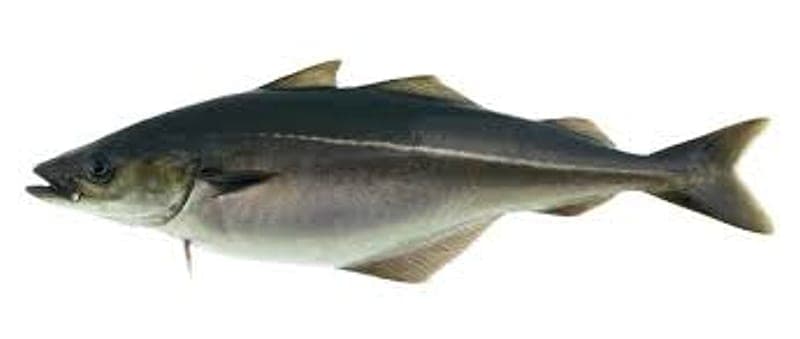
Curved lateral line, lower jaw protrudes beyond the upper jaw, greenish-brown back fading to silver on the flanks.

Coalfish

Straight lateral line, jaws roughly equal, darker, almost black back. Often slimmer in the body when seen side by side.

Coalfish are less common from Wicklow shore marks than pollack, but both turn up on the same lures at Wicklow Head and Greystones in summer. See our pollack and coalfish guide for more detail on tactics and marks.

Plan your next session

Target pollack on the daily plan

Ranked marks, species windows, and gear for the Wicklow shore.

Your marks

Your marks, one glance away.

Pin a mark and it sits here on every page with today’s verdict and its best window. Kept on this device.

Find one to pin: 20 Wicklow marks · 17 Dublin Bay marks

Sign in to keep your marks on every device and get free alerts.