This article contains affiliate links. If you purchase through these links, we may earn a small commission at no extra cost to you.
What is a smoothhound?
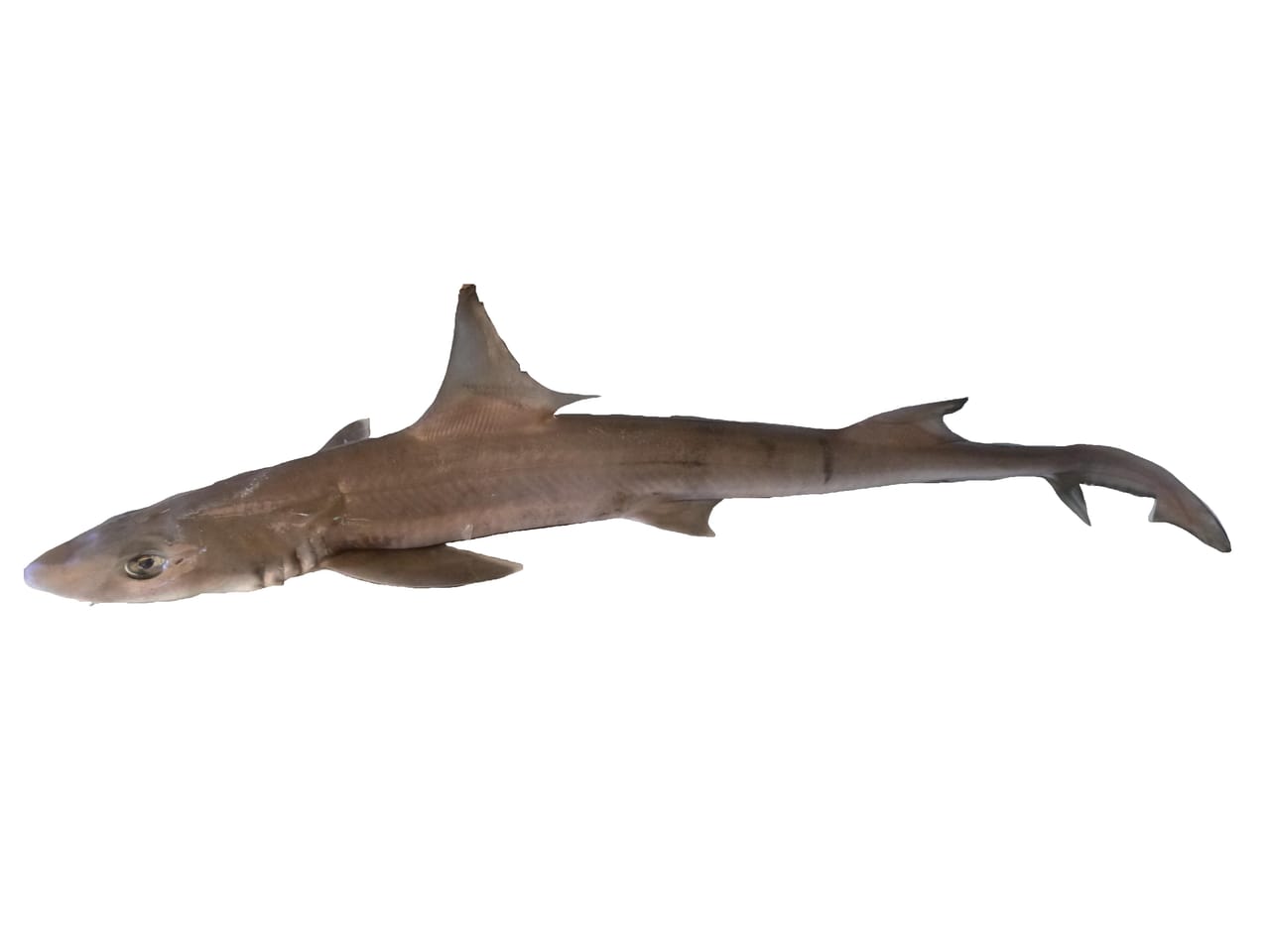
Updated for the 2026 season. Smoothhound are arriving on Wicklow sandy beaches from late May, with June and July the main months on the coast. The smoothhound is one of Ireland's most exciting shore-caught shark species, a powerful, fast-running fish that strips line on first contact and tests tackle to its limits. Two species are caught on Irish shores: the Common Smoothhound and the Starry Smoothhound, distinguished by white spots on its back. Both fight identically, hard, fast and relentlessly.
Unlike tope, smoothhound have no cutting teeth, they feed on crabs and shellfish using crushing plates. This means no wire trace is required, which makes presenting a natural crab bait much easier. Shore catches from Wicklow regularly run to 6 to 8 kg, with double-figure fish taken from open beaches every season.
When do smoothhound arrive?
Smoothhound appear on the Wicklow coast in May as water temperatures begin to rise and move inshore following the peeler crab cycle. June, July and August are the peak months with fish present throughout the day and into the night. On Brittas Bay (open sand), evening flood through high is still the classic window. Silver Strand and the Greystones to Wicklow shingle belt (Kilcoole, Greystones South, Murrough) are usually written up ebb-weighted, especially after an easterly colours the water, still read the mark's spot page for Silver Strand's shallow high-water-close bass notes. Always read the mark's spot page before you default your session time.
Spring tides produce better fishing than neap tides, the greater tidal movement shifts more bait and keeps smoothhound actively feeding. Numbers hold into October on settled evenings, then ease as water cools.
Best Wicklow marks
Brittas Bay
The premier smoothhound beach on the Wicklow coast. Clean sandy ground, strong tidal run, and consistent fish from June through August. The southern end of the beach produces the most fish. Evening into night sessions on spring tides are the reliable formula.
Silver Strand
Clean sandy beach south of Wicklow Head producing smoothhound alongside bass and flounder. Less busy than Brittas Bay and equally productive. Night sessions from June to October are most consistent.
Greystones South Beach
Smoothhound feature in summer catches alongside bass and dogfish. The steep shingle and strong tidal run suits the species. Fresh crab on grip leads through moving water; tide stage follows the shingle-belt pattern (usually ebb-weighted after a blow), see the spot guide.
Kilcoole Beach
Open sandy ground produces smoothhound on summer evening tides. Less pressure than Brittas Bay makes it worth targeting.
Bait, crab is king
Fresh peeler crab is by far the best smoothhound bait and there is no close second. Smoothhound follow the tidal movement of peeler crabs, they are essentially hunting the crab beds. Fresh peeler dramatically outperforms frozen at every session.
Present a whole small crab or a large half crab on the hook. Thread the hook through the body of the crab and bind it securely to the hook and shank with elastic bait thread, smoothhound run hard and a poorly secured bait will be stripped without hooking the fish. Hermit crab and squid-and-crab cocktails are useful alternatives when peeler is scarce.
Tackle and rigs
A standard beachcaster of 12 to 13ft matched to a 6000 to 8000 size reel loaded with 20 to 30 lb monofilament or braid is the right setup. Smoothhound run hard and fast on first contact, a reel with a reliable drag is essential.
Rig
Running ledger, sliding lead above a swivel with a long hooklink of 18 to 24 inches
Hooklink
30 to 50 lb mono or fluorocarbon, no wire trace needed, smoothhound have no cutting teeth
Hook
Size 4/0 to 6/0 strong wide-gape hook, smoothhound fight hard and need a strong pattern
Lead
4 to 5oz breakaway grip lead, smoothhound beaches have a strong tidal run
Playing and handling
Smoothhound take the bait and run immediately, don't strike too early. Let the fish move off with the bait for a few seconds before tightening into it. Once hooked they make powerful runs parallel to the shore and will test your drag. Keep steady pressure and don't rush the fight.
Smoothhound are a shark species under increasing pressure. Return all fish promptly, unhook in the water where possible, support the fish horizontally and lower it back gently. A well-handled smoothhound recovers quickly. They are poor eating and a far better resource in the water.
Recommended gear
Smoothhound fishing essentials
Three items that make the difference when targeting smoothhound from Wicklow beaches.
Affiliate links, we earn a small commission if you buy, at no extra cost to you.
Bait Elastic Thread (2 x 200m)
~€7Essential for smoothhound fishing, bind peeler crab firmly to the hook so it survives the cast and stays on when a fish picks it up and runs. No elastic means missed fish.
View on AmazonPhoxinus Baitholder Hooks 4/0 (25 pack)
~€5Strong wide gape hooks in 4/0, the right size for whole or half peeler crab on smoothhound traces. Baitholder pattern holds the crab securely on the hook.
View on AmazonSF Mono 50lb Hooklink Line (275 yds)
~€13Heavy mono for smoothhound hooklinks, 50lb breaking strain is the standard for Wicklow smoothhound traces. No wire needed as smoothhound have no cutting teeth.
View on AmazonPlan your next session