Mark × species · Secondary target
Sea trout at The Breaches, Kilcoole.
Sea trout is a regular secondary target at The Breaches, Kilcoole near Newcastle. Best window on this ground: July to October. Long walk in from either Kilcoole (north) or Newcastle (south).

Quick facts
- Mark type
- Beach
- Skill
- Intermediate
- Catalogue rank
- Secondary target
Why fish Sea trout at The Breaches, Kilcoole
Kilcoole shingle-belt outflow under the rail bridge. Under-targeted specimen mullet; flounder, sea trout and bass at the same channel.
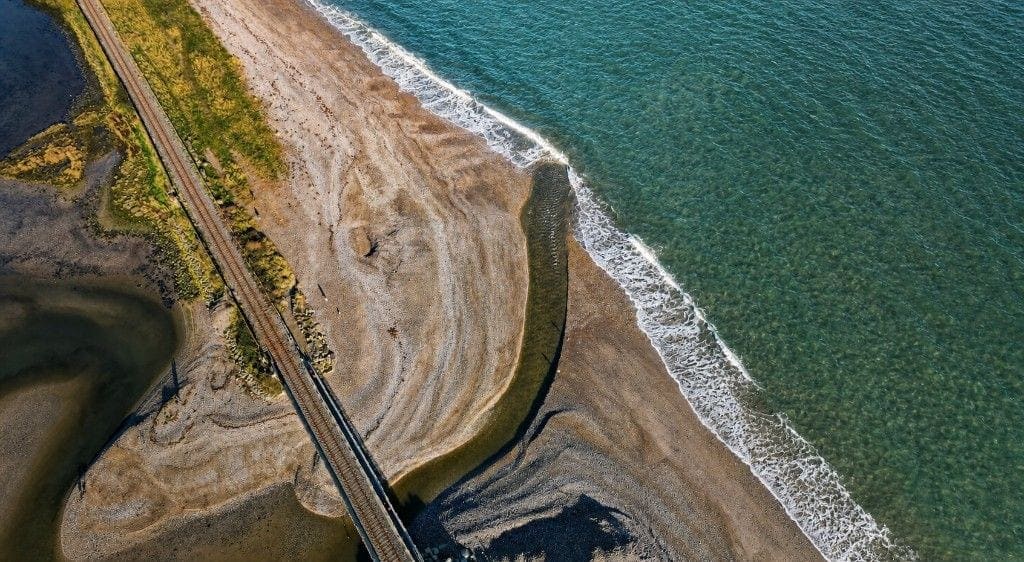
Marsh gullies and mountain streams from the Kilcoole shingle belt meet the sea under a railway bridge, on older maps marked as 'The Breaches'.
This is ERFB Site 23, not the Broad Lough / Vartry system at Wicklow (Site 28 Broadlough on the Murrough), which lies about 12 km south.
The single most under-targeted specialist mark on this stretch of coast, the Eastern Regional Fisheries Board guide explicitly notes mullet 'well over the specimen weight of 5 lb' present, with 'little attempt to catch them'.
Flounder concentrate at the freshwater interface; sea trout pass through on their run; bass at dawn/dusk on the outlet.
Surf beaches and lagoon outlets where freshwater meets the sea, with fish running tide lines and current seams at dusk and after dark.
Kilcoole outflow specialist mark, specimen mullet and flounder, groundbait and finesse tactics required.
The Eastern Regional Fisheries Board guide points straight at this mark (Site 23): 'Some of these fish appear to be well over the specimen weight of 5 lbs but to date there has been little attempt to catch them.
Time spent fishing for both of these species may be well rewarded'.
Two tactical points: (1) the pool BEHIND the rail line is sheltered from open-sea conditions and fishes on days the open beach is unfishable; (2) flounder concentrate at the freshwater/saltwater interface at all tides, not just slack, this is reliable winter fishing.
Season and tide
At The Breaches, Kilcoole, Sea trout is worth targeting in July to October. Coast-wide, Sea trout runs July to October (peaks August to September late summer and early autumn evenings).
Wider mark season: Grey mullet: May to October (specimen-class possible), Flounder: year round at freshwater interface, Sea trout: July to October, Bass: April to November (peak autumn Sep to Nov; outlet at dawn/dusk), Dab: October to February
Tide guidance here: Mullet move into the pool behind the bridge on the flood and back out on the ebb, both windows fish the channel. Bass at the outlet on the flooding tide at dawn or dusk. Flounder concentrate at the freshwater/saltwater interface throughout the tide.
Late summer and early autumn evenings, work current seams and surf tables on the flood as light fades.
Fishable phases: first-flood, mid-flood, high, first-ebb, mid-ebb. Peak: mid-flood, first-ebb.
Tactics on this mark
Fish mobile with lures or fly along lagoon mouths and surf tables on evening floods, covering water and focusing on current seams where bait gathers.
Float-fished bread or flake (mullet, specialist technique); Light ledger with worm or crab close in (flounder); Surface lures or sub-surface plugs at the outlet (bass); Single-handed fly (sea trout)
Gear: vertical drop. Facing E.
- Small spoons and spinners fished along current seams
- Shallow plugs and surface patterns where conditions allow
- Fly along surf tables where regulations and access permit
- Float-fished bread or flake (mullet, specialist technique)
- Light ledger with worm or crab close in (flounder)
- Surface lures or sub-surface plugs at the outlet (bass)
- Single-handed fly (sea trout)
Baits and lures
Sea trout baits and lures: Small spoons; Spinners; Surface and shallow-diving plugs; Fly patterns over the surf.
What this mark typically holds: Bread/flake (mullet); Ragworm; Peeler crab; Small lures (bass/sea trout).
Bread/flake (mullet); Ragworm; Peeler crab; Small lures (bass/sea trout)
Access and ground
Long walk in from either Kilcoole (north) or Newcastle (south). The railway bridge with the freshwater channel is the singular landmark. No road access mid-beach. The pool behind the rail line is sheltered from open-sea conditions and fishes when the open beach does not.
Parking: Limited; Kilcoole station or Newcastle area as starting points.
Safety: SAC/SPA wetland, quiet behaviour required, bird sensitivities apply. Fast-flowing channel at peak ebb, never wade across. Long walk in, no facilities, patchy mobile coverage.
Nearest tackle: Wicklow town or Greystones tackle shops; specialist mullet bread/groundbait is BYO.
Nearest town: Newcastle. Skill level: Intermediate.
Size and identification
Typical shore size around 1 to 3 lb from surf and lagoon outlets; specimen class from about Larger fish to 5 to 6 lb possible in the right conditions.
Trout-like build with sea-run silver when fresh from salt; spots along the flank and adipose fin present. Often encountered where freshwater pushes into the surf table at lagoon outlets.
Tip: Sea trout sit in narrow windows where bait and current meet, cover water methodically and treat every fish as potentially regulated; when in doubt, release.
Irish shore context: record class around See IFI records, larger fish possible in good conditions.
Same-mark companions
Other ranked targets on the same mark include Grey mullet, Flounder, Bass, Dab. Open those pair pages or the full mark guide when you want a multi-species session.
Live ranked advice for The Breaches, Kilcoole updates on Today's plan. Pair this page with the Sea trout species guide for coast-wide season bars and conservation detail.
Conservation
Migratory salmonids are vulnerable; strict local regulations apply and catch and release is usually expected.
Guide conservation label: Highly Recommended C&R.
Confirm current bag limits and closures on the Sea trout species guide and /learn/rules before retaining fish.
Next steps
Live ranked session advice for this mark sits on today's plan. Rules and bag limits: learn / rules.
NEXT STEP
Open the full mark or species guide.
Pair pages assemble mark and species catalogue facts for this ground. Depth sessions live on Today's plan.