Mark × species · Primary target
Thornback ray at Killoughter Beach.
Thornback ray is a primary target at Killoughter Beach near Newcastle. Best window on this ground: May to September. Access via the local road from Newcastle/Ashford direction.

Quick facts
- Mark type
- Beach
- Skill
- Intermediate
- Catalogue rank
- Primary target
Why fish Thornback ray at Killoughter Beach
Reputed best Wicklow beach venue. Specimen homelyn, thornback, smoothhound and bullhuss in the catch record.
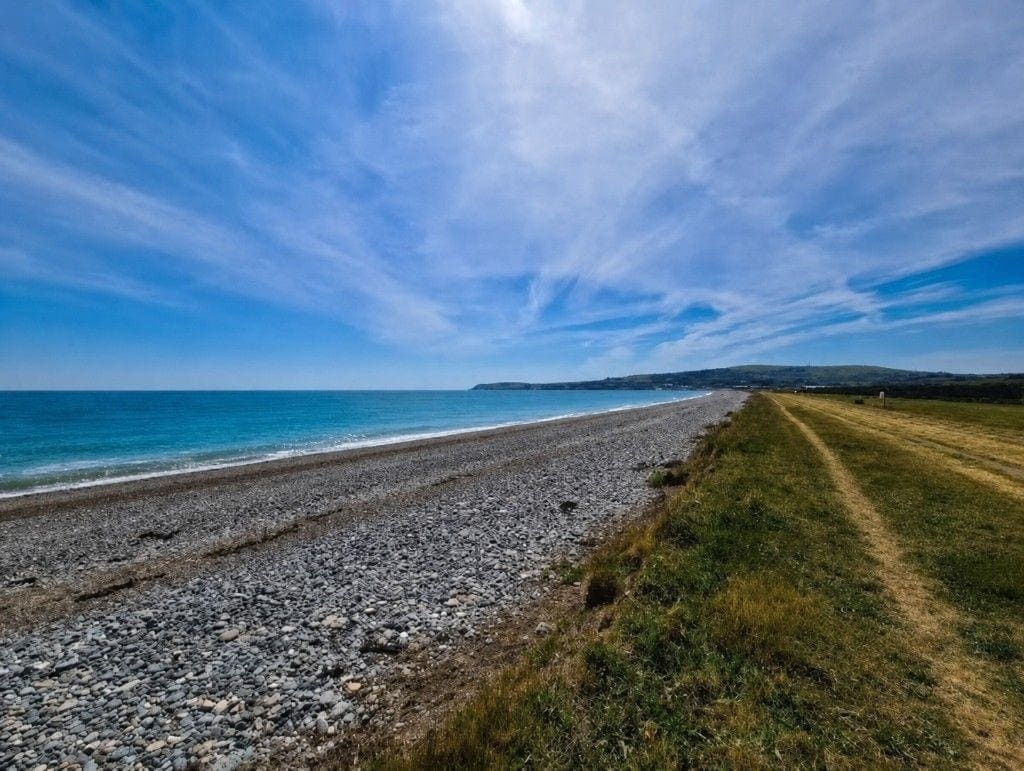
A shingle beach in the heart of the Greystones-to-Wicklow shingle belt.
Documented in the Eastern Regional Fisheries Board guide as the regard of many anglers as the BEST of all the Wicklow beach venues, the beach turns up quality fish with regularity.
Specimen-class homelyn ray, thornback ray, smoothhound, bullhuss and occasional spurdog have all been recorded here.
Short: Reputed best Wicklow beach venue.
Clean to slightly mixed sand off open beaches where sandeel, crab and small fish are present, often at long range.
Local note: Thornback sit beyond the close-in ground that holds the codling and flatfish, so rays here need a genuine distance cast rather than a comfortable one. Evening and night sessions on the falling tide are the documented pattern for the predator species on this beach.
Reputed specimen beach for rays and hounds on spring nights, not a beginner mark.
The Eastern Regional Fisheries Board guide explicitly states 'many anglers regard Killoughter as the best of all the Wicklow beach venues' on the basis that it produces quality fish with regularity.
Specimen-class homelyn ray, thornback, smoothhound and bullhuss are all in the catch record, this is a serious species venue, not a casual beach.
Two practical local notes: (1) the road in is poor, and (2) weed can shut the beach down after onshore wind, one SAI session was abandoned for that reason and turned out to be the wrong call (the weed cleared shortly after).
Season and tide
At Killoughter Beach, Thornback ray is worth targeting in May to September. Coast-wide, Thornback ray runs May to October (peaks June to August late spring through midsummer on clean sand).
Wider mark season: Smoothhound: May to October (specimen-class possible), Thornback ray: May to September, Homelyn ray: May to September, Bullhuss: summer evenings (specimen-class), Bass: April to November (peak autumn Sep to Nov), Codling: October to February, Dab: October to February, Flounder: October to March, Spurdog: occasional summer night, Whiting: October to February
Tide guidance here: Falling tide for the shingle-belt pattern. Evening and night sessions for the predator species. Distance casting required for hounds and rays; close-in for codling and flatfish.
Late spring through midsummer on clean sand. Fish the flooding tides and high-water soaks with baits anchored at long range on pulley or pennel rigs.
Fishable phases: mid-flood, high, first-ebb, mid-ebb. Peak: first-ebb, mid-ebb.
Tactics on this mark
Cast pulley rigs or up-and-over pennel rigs long over clean ground, leaving baits anchored to soak on flooding tides and around high water.
Pulley rig at distance (hounds/rays/huss); Standard flatfish rigs close in; Two-hook flapper
Gear: open beach. Facing E.
- Long-range pulley or up-and-over pennel rigs with fish strip or sandeel
- Crab and fish cocktails on hound sessions
- Leave baits to soak; strike only when the classic ray nod builds
- Pulley rig at distance (hounds/rays/huss)
- Standard flatfish rigs close in
- Two-hook flapper
Baits and lures
Thornback ray baits and lures: Sandeel; Bluey or mackerel strip; Crab and fish cocktails.
What this mark typically holds: Hardback green crab (hounds, outlasts peeler against lesser species); Squid (rays); Lugworm (codling/dab); Mackerel head (bullhuss).
Hardback green crab (hounds, outlasts peeler against lesser species); Squid (rays); Lugworm (codling/dab); Mackerel head (bullhuss)
Access and ground
Access via the local road from Newcastle/Ashford direction. The road in is poor, described in SAI session reports as 'potholed' with limited improvement over the years. Small car park at the end. Railway crossing required for some access routes.
Parking: Small car park at end of access road; arrive early on quality conditions.
Safety: Railway crossing required for some access routes, designated points only. Standard shingle-beach safety. Weed can shut the beach down after onshore wind, judge the conditions on arrival.
Nearest tackle: Wicklow town or Greystones tackle shops.
Nearest town: Newcastle. Skill level: Intermediate.
Size and identification
Typical shore size: 2 to 5 lb from Wicklow beaches. Specimen class: Rays over 8 lb are considered good shore fish locally.
Kite-shaped ray with thorn-like spines dorsally, often grey-brown with lighter mottling; underside pale. Thornback is the common large skate/ray label on Wicklow clean-sand beaches at range.
Tip: Read each beach's safety and distance notes before copying one tide rule across marks. Brittas Bay, Killoughter and Silver Strand each fish slightly differently and carry different hazards.
Irish shore context: record class around See the IFI records. Locally, 8 lb plus is a good shore ray..
Same-mark companions
Other targets on the same mark include Smoothhound, Homelyn ray, Bullhuss, Bass, Codling, Dab. Open those pair pages or the full mark guide when you want a multi-species session.
Live advice for Killoughter Beach updates on the daily plan. Pair this page with the Thornback ray species guide for coast-wide season bars and conservation detail.
Conservation
Heavily pressured in some areas; unhook carefully in the shallows and return larger breeding fish.
Guide conservation label: Catch & Release Recommended.
Confirm current bag limits and closures on the Thornback ray species guide and /learn/rules before retaining fish.
Next steps
Live session advice for this mark sits on Today's plan. Rules and bag limits: learn / rules.
NEXT STEP
Open the full mark or species guide.
Pair pages assemble mark and species catalogue facts for this ground. Depth sessions live on today's plan.